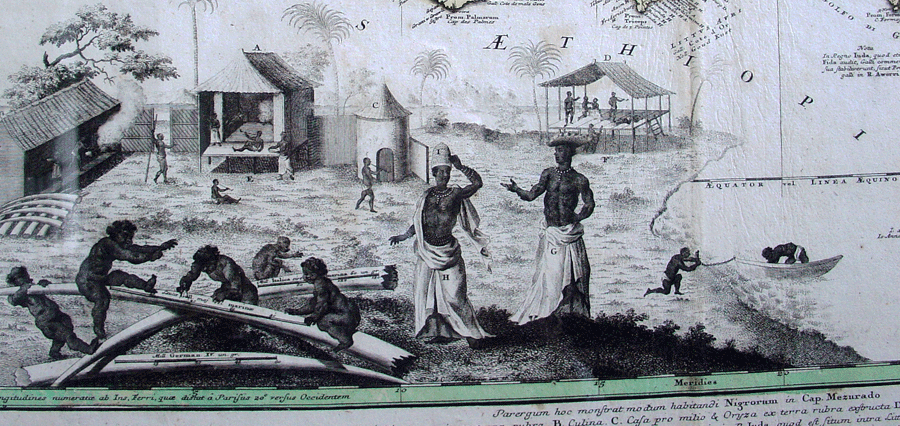
The PeopleThe king who reigned in 1726 was called Captain Peter, a name
which had long been common to the kings of Mesurado. When dealing with the Dutch
and English, both parties took every precaution against roguery. They were armed,
hostages were exchanged, and mutual caution observed. The French1, on the
contrary, traded there without the least suspicion. The natives put themselves
in their power, went on board French ships without fear, and on all occasions
manifested the most friendly disposition towards them. The French dealt with
them as with old and faithful friends, went on shore unarmed, committed their
persons and effects to the safeguard of the natives, and never had any reason to
repent of this confidence.
“The religion of the natives of Mesurado is a kind of idolatry, ill
understood, and blended with a number of superstitions, to which, however, few
of them are bigoted. They easily change the object of their worship, and
consider their fetishes only as a kind of household furniture. The sun is the
most general object of their adoration; but it is a voluntary worship, and
attended with no magnificent ceremonies.”
“In the space of a few leagues are many villages swarming with children. They
practise polygamy, and their women are very prolific. Besides, as those people
deal no further in slaves than by selling their convicted criminals to the
Europeans, the country is not depopulated like those in which the princes
continually traffic in their subjects. The purity of the air, the goodness of
the water, and the abundance of every necessary of life all contribute to people
this country.”
“The natives are of large size, strong, and well proportioned. Their mien is
bold and martial, and their neighbours have often experienced their intrepidity,
as well as those Europeans who attempted to injure them. They possess genius,
think justly, speak correctly, perfectly know their own interests, and, like
their ancient friends the Normans, recommend themselves with address and even
with politeness. Their lands are carefully cultivated, they do everything with
order and regularity, and they labour vigorously when they choose, which,
unfortunately, is not so often as could be wished. Interest stimulates them
strongly, and they are fond of gain without appearing so. Their friendship is
constant; yet their friends must beware of making free with their wives, of whom
they are very jealous. But they are not so jealous with respect to their
daughters, who have un unbounded liberty, which is so far from impeding their
marriage that a man is pleased at finding that a woman has given proofs of
fertility, especially as the presents of her lovers make some amends for that
which he is obliged to give her parents when he marries her. They tenderly love
their children, and a sure and quick way to gain their friendship is to caress
their little ones and to make them trifling presents.”
Living conditions
|
|